121marketing provide the following effective and sufficient A-to-Z digital wave services to our clients who have strong ambition in achieving the highest goal in business:
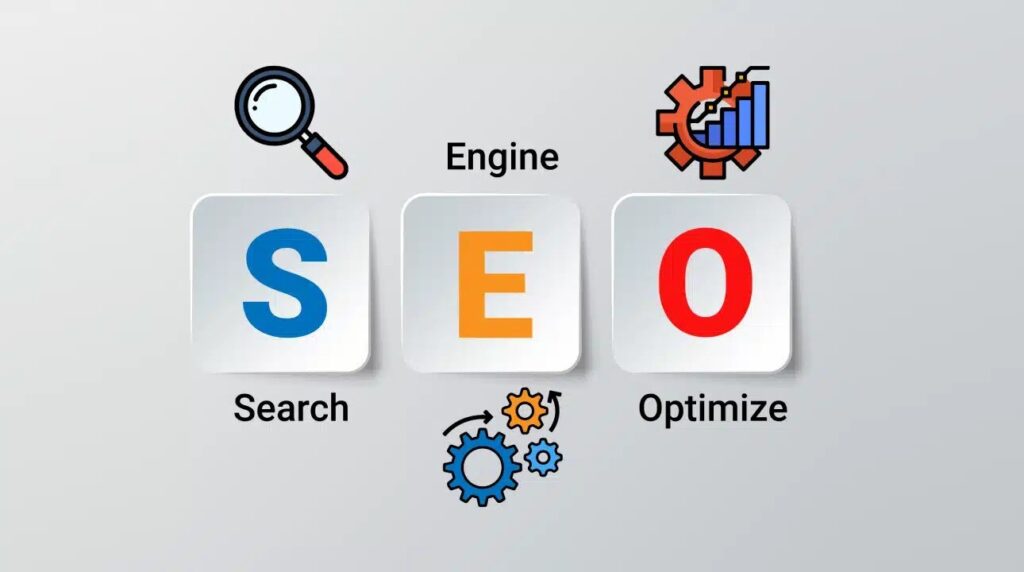
Search Engine Optimization (SEO)
There are three core types of Search Engine Optimization (SEO)—On‑Page, Off‑Page, and Technical SEO. These form the foundation of all SEO strategies. Building on them are several specialized branches, such as Local, International, E‑commerce, and AI‑driven SEO, each designed to target specific goals, audiences, and search environments. Together, these approaches optimize content, authority, site structure, and user experience to improve visibility across search engines.
Core Types of SEO
On‑Page SEO: Optimizing elements directly on your website—such as keywords, titles, content, headers, and meta descriptions—to help search engines understand and rank your pages.
Off‑Page SEO: Activities performed outside your website, primarily focused on earning high‑quality backlinks to build authority, trust, and credibility.
Technical SEO: Improving the backend structure of your website to ensure it is fast, mobile‑friendly, crawlable, and properly structured with schema markup for search engines.
Additional Specialized Types of SEO
Local SEO: Targets users in a specific geographic area—essential for local businesses. This includes optimizing your Google Business Profile and local citations.
E‑commerce SEO: Enhances product pages, categories, and site architecture to improve visibility and conversions for online stores.
Content SEO: Creating high‑value, search‑focused content that satisfies user intent and naturally attracts backlinks.
Image & Video SEO: Optimizing visual media with proper tags, descriptions, and formats to improve rankings in image and video search results.
AI SEO: Adapting strategies for AI‑driven search experiences, including voice search optimization and content structured for AI‑powered results.
We ask £30 per keyword / month for the SEO campaign.
| 1 keyword SEO | £30 / month (including VAT) |
| 2 keywords SEO | £60 / month (including VAT) |
| 3 keywords SEO | £90 / month (including VAT) |
| 4 keywords SEO | £90 / month (including VAT) |
Social media
Social media is essential for modern businesses. It strengthens brand awareness, enables direct customer interaction, drives website traffic, generates leads, and provides real‑time insights into competitor activity. Most importantly, it offers a cost‑effective way to expand your market reach and increase sales by engaging customers where they already spend their time.
Compared to traditional marketing, social media provides an affordable and highly effective way to connect with your audience, offering the following 4 key benefits for your business:
Brand Building & Awareness: Boosts visibility, reinforces your offline brand presence, and positions your company as an industry leader.
Customer Engagement: Enables direct, real‑time communication that builds trust, loyalty, and a strong sense of community.
Lead Generation & Sales: Attracts new customers, drives traffic to your website, and converts interest into sales through targeted content and advertising.
Market Research: Provides valuable insights into customer preferences, competitor strategies, and emerging industry trends.
Customer Service: Creates a convenient platform for fast support, issue resolution, and improved customer satisfaction.
| 1 social media campaign | £30 / month (including VAT) |
| 2 social media campaign | £60 / month (including VAT) |
| 3 social media campaign | £90 / month (including VAT) |
| 4 social media campaign | £90 / month (including VAT) |
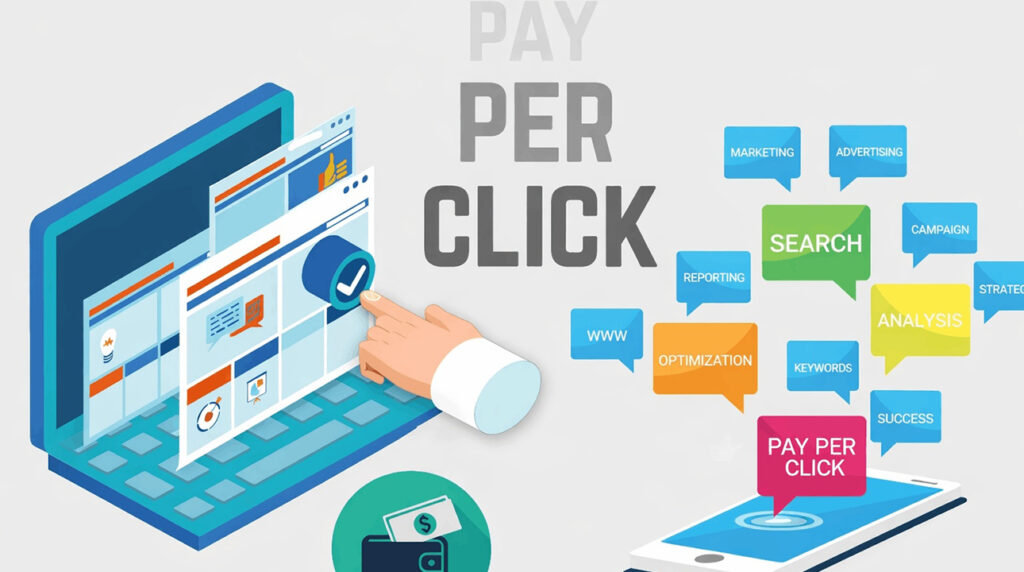
Pay-Per-Click (PPC)
Pay‑per‑click (PPC) marketing has become one of the most effective and accessible digital advertising tools for small and medium‑sized enterprises (SMEs). If your goal is to increase brand awareness, drive targeted traffic, and generate leads quickly, PPC can deliver results far faster than many traditional marketing methods. Unlike broad advertising campaigns, PPC allows you to reach customers who are actively searching for your products or services, giving your business immediate visibility in competitive markets.
One of the biggest advantages of PPC for small businesses is cost control. You only pay when someone actually clicks on your ad, ensuring your budget is spent on real engagement rather than impressions alone. Business owners can set a maximum daily budget and define the highest amount they are willing to pay per click, making PPC highly flexible and scalable. Whether you want to compete for high‑value keywords or focus on more affordable, locally targeted searches, PPC gives you full control over your strategy. This makes it especially useful for businesses looking to strengthen their local SEO presence and attract nearby customers.
However, while PPC offers powerful benefits, it also comes with risks that business owners should consider carefully. One growing concern is the rise of malicious or fraudulent clicks—instances where competitors, bots, or automated systems repeatedly click on ads with the intention of draining your budget. These invalid clicks can inflate costs without delivering genuine leads, making PPC less efficient if not properly monitored.
For this reason, we advise SMEs to approach PPC thoughtfully, especially in the current digital landscape. With the right strategy, monitoring tools, and expert guidance, PPC can be a valuable asset. But understanding both its strengths and potential risks is essential before investing your marketing budget.
Please contact us for PPC plan.
Email Campaigns
Email campaigns are coordinated series of marketing emails sent to a list of contacts with specific goals, like promoting products, building relationships, or sharing updates, using personalized content, segmentation, clear calls-to-action (CTAs), and performance tracking to drive desired customer actions, such as purchases or sign-ups, and build engagement. They can range from one-off blasts to complex automated journeys but always focus on delivering relevant value to the subscriber.
Key Components
Goal-Oriented: Each campaign has a clear objective (e.g., sales, downloads, engagement).
Targeted Audience: Sent to specific segments of your list (e.g., new subscribers, loyal customers) for relevance.
Personalization: Uses subscriber data (like names) to make emails feel individual.
Compelling Content: Includes valuable information, well-written subject lines, and engaging visuals.
Call-to-Action (CTA): A clear, bold button or link prompting the next step (e.g., “Shop Now,” “Download”).
Automation: Can be triggered by user actions (e.g., abandoned cart emails).
Tracking: Metrics like open rates, click-through rates (CTR), and conversions are monitored for improvement.
Common Types of Campaigns
Promotional: Announce sales, discounts, or new products.
Welcome Series: Onboard new subscribers with a sequence of introductory emails.
Nurturing/Drip Campaigns: Educate and build relationships over time with relevant content.
Re-engagement: Win back inactive subscribers.
Transactional: Order confirmations, shipping updates (often automated).
Please contact us for PPC plan.

AI related digital service
AI‑related services—often delivered through a digital‑based model — allow businesses to integrate powerful artificial intelligence capabilities without needing extensive in‑house infrastructure or specialised expertise. These services rely on pre‑trained models, making advanced AI tools accessible, scalable, and cost‑effective. They can be grouped into several key categories based on their function and use case:
Natural Language Processing (NLP) / Language: AI services that enable computers to understand, interpret, and generate human language. For examples: Chatbots and virtual assistants, sentiment analysis, language translation, text summarisation, automated content generation.
Computer Vision: Technologies that analyse and interpret visual data from images or videos.
Examples: Object and facial recognition, image classification, visual anomaly detection in manufacturing, automated quality control.
Speech Recognition & Synthesis: Tools that convert spoken language into text (speech‑to‑text) and generate natural‑sounding audio from text (text‑to‑speech). For examples: Voice‑enabled applications, transcription services, virtual assistants such as Google Assistant.
Machine Learning & Predictive Analytics
Services that use data and algorithms to identify patterns, make predictions, and support data‑driven decision‑making. For examples: Fraud detection, demand forecasting, personalised product recommendations for e‑commerce, predictive maintenance for machinery and equipment.
AI Agents & Workflow Automation: Autonomous systems capable of reasoning, planning, and executing tasks with minimal human intervention. For examples: Automated claims processing, streamlined customer support handling, internal workflow and process automation.
Please contact us for AI plan.
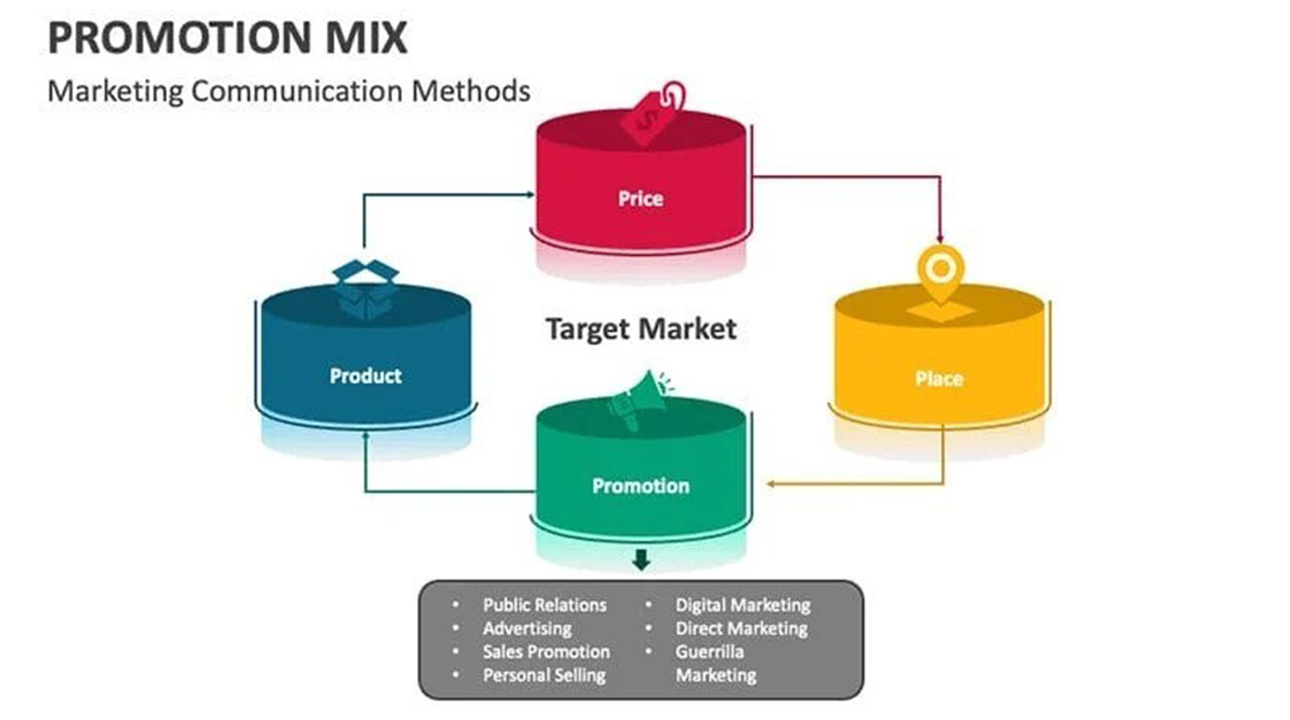
Complete 4P business solutions (Product—Price—Place—Promotion)
By applying the 4 Ps of marketing—Product, Price, Place, and Promotion—your products and services can be effectively delivered to the right consumer communities. Promotion plays a crucial role in building awareness, persuading customers to buy, and shaping a strong, memorable brand image. It is the way businesses communicate with their target audience through channels such as advertising, sales promotions, public relations, personal selling, and digital marketing.
Key Goals of Promotion
Inform: Introduce new products, highlight features, and educate customers.
Persuade: Encourage consumers to choose your product over competing options.
Remind: Keep your brand top‑of‑mind and reinforce the value you offer.
Build Brand Image & Logo: Create a positive, consistent perception that fosters trust and loyalty.
Common Elements of the Promotional Mix
Advertising: Paid communication through TV, radio, print media, online ads, and social platforms.
Sales Promotion: Short‑term incentives such as discounts, coupons, contests, and buy‑one‑get‑one offers.
Public Relations (PR): Building goodwill through press releases, events, community engagement, and positive media coverage.
Personal Selling: Direct, face‑to‑face interaction, including sales presentations, consultations, and trade shows.
Direct Marketing: Targeted outreach via email, direct mail, SMS, or telemarketing.
Sponsorship: Aligning your brand with events, organisations, or causes to enhance visibility and credibility.
Our marketing promotion acts as the voice of your product, clearly communicating why customers need it and how they can access it. By combining the right promotional tools at the right time, we ensure your message reaches the audience that matters most.
Please contact us for 4P plan.